Potholes and crumbling edges: what tarmac damage is telling you
6 min read Tarmac Revive
Tarmac rarely fails without warning. Each type of damage points at a specific cause, and reading them correctly is the difference between a patch repair and relaying the drive.
Damage on a tarmac drive is diagnostic. Where it is, what shape it takes and how it feels underfoot all point somewhere specific. Here is how to read the common ones.
Crumbling edges
Far and away the most common failure, and the most preventable. Tarmac gets its strength from lateral confinement — it needs something holding it in from the sides. An unedged drive has nothing restraining the outer few inches, so wheels running slightly wide break it away progressively.
Once the edge starts going, water gets into the exposed side of the base and the failure accelerates inward. The fix is to cut back to sound material, repair, and then install proper edging — a haunched kerb, block edging or a concrete haunch. Repairing the edge without restraining it just resets the clock.
Potholes
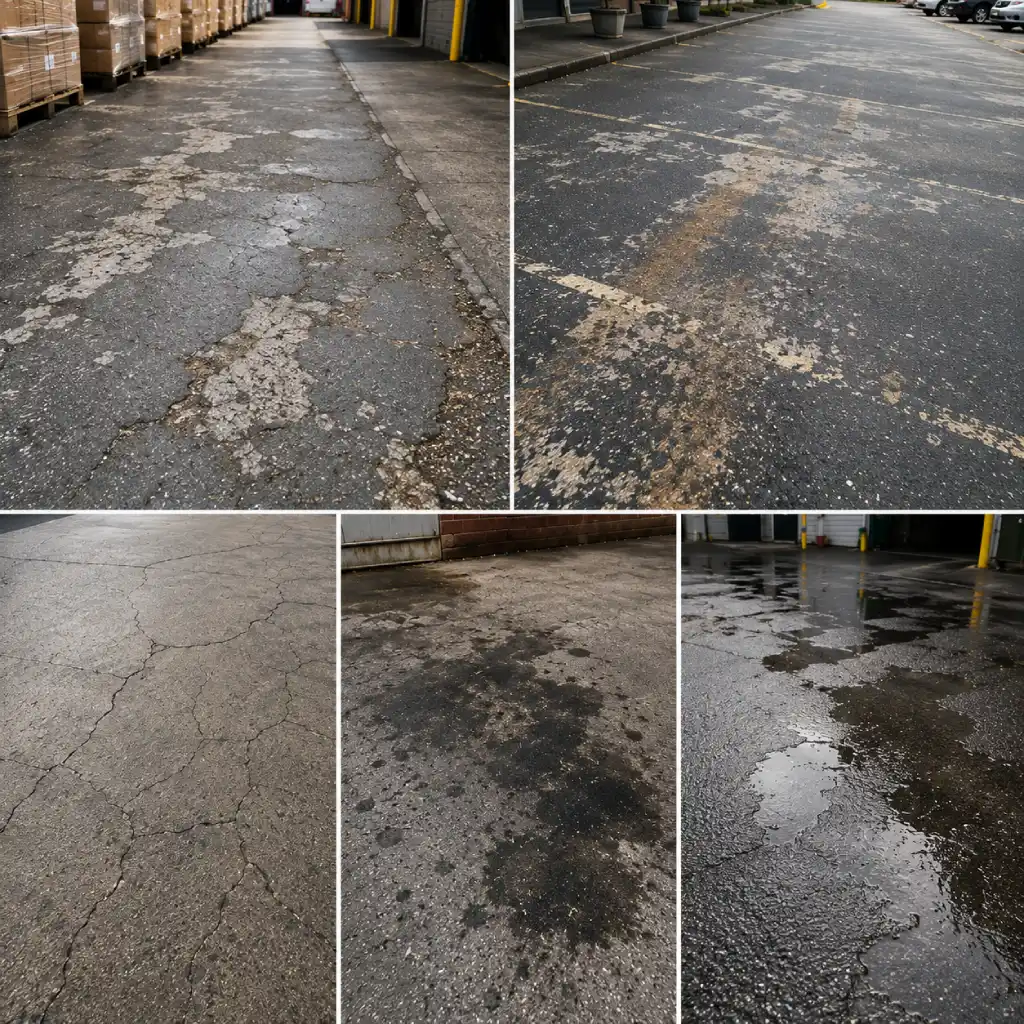
A pothole is the end of a sequence rather than a sudden event. Water gets through a crack or an open surface into the base. It freezes and expands, breaking the material apart. Traffic then pumps the loosened material out and a hole forms.
The critical question is what is underneath. A shallow pothole in a sound base is a straightforward cut-out and patch. A pothole with a soft, wet or springy base means the sub-base has failed, and patching the surface over it will fail again within a year or two. Anyone quoting to fill a pothole without checking what is beneath it is guessing.
Cracking patterns
Single straight cracks
Often reflective cracking coming up from a joint or crack in an older layer beneath, or thermal movement. Usually not urgent structurally, but it is a route for water and should be sealed.
Interlinked cracking in a block pattern
Commonly called crocodile or alligator cracking. This is fatigue failure — the surface has flexed under load more than it can take, which almost always means the base is inadequate or has softened. This one is structural. Sealing it is a delaying tactic.
Crescent-shaped cracks
Usually where vehicles brake or turn sharply. The surface layer has slipped over what is beneath, often because the bond between layers was poor.
Depressions and rutting
Ruts following wheel paths, or a dish where vehicles park, mean the surface or base is deforming under load. Causes range from a sub-base that was too thin for the use, to a binder course laid too soft, to ground that was not properly compacted. If water then stands in the depression, deterioration speeds up considerably.
Soft or springy patches
If an area feels like it gives underfoot, or a wheel visibly deflects it, water has reached the sub-base and softened it. This is the most serious symptom on the list and it will not improve on its own. It needs excavating and rebuilding, and no surface treatment addresses it.
What to do about each
- Edges going — repair and install proper restraint. Do not delay; it spreads.
- Isolated potholes, sound base — cut out square, repair properly.
- Potholes with a soft base — excavate and rebuild that section.
- Fine cracks, sound surface — clean and seal to keep water out. Good value.
- Interlinked cracking — structural; get it assessed rather than sealed.
- Springy areas — base rebuild. Nothing else works.
The general rule
Water is what destroys tarmac, and every one of these failures is either caused by water getting in or is about to let water in. Keeping the surface sealed and the drainage clear prevents the large majority of it.
If you are unsure which category yours falls into, that is exactly what a free assessment is for. We would rather tell you a drive needs a base repair than sell you a seal that fails.
Common questions
- Why do the edges of my tarmac drive keep breaking away?
- Tarmac needs lateral restraint. Without a haunched kerb or block edging, wheels running wide break the unsupported edge away and water then gets into the base.
- Can a pothole just be filled in?
- Only if the base beneath is sound. If the area feels soft or springy, the sub-base has failed and a surface patch will break up again within a year or two.
- What does cracking in a block or crocodile pattern mean?
- Fatigue failure from loading the surface beyond what the base supports. It is structural and needs assessing rather than simply sealing.