Getting a tarmac drive through winter: leaves, moss, frost and salt
6 min read Tarmac Revive
Winter does more harm to a tarmac drive than any other season, and most of it starts with water that cannot get away. A handful of jobs between October and March make the difference between a drive that comes out of winter tired and one that comes out cracked.
Through the summer a tarmac drive mostly just fades. From October onwards it gets wet, stays wet, and freezes now and then, and that combination is what turns a grey surface into a broken one. None of what follows needs special kit. It is mostly about keeping water moving and not scraping the surface while you deal with the weather.
Leaves: the first job of the autumn
Fallen leaves on tarmac act like a damp blanket. It keeps the tarmac under it from drying, it rots down into a dark, slippery film, and the tannins in it leave stains that outlast the leaves themselves. Left long enough, the mulch becomes the soil that moss grows in.
- Sweep or blow leaves off once a week while they are falling, more often under a big tree.
- Pay most attention to corners, the base of walls and gateways, where they pile up and stay.
- Clear channel drains, gullies and the grate at the bottom of a sloping drive. A blocked drain in November means a puddle sitting on the surface until March.
Moss and algae: why they move in now
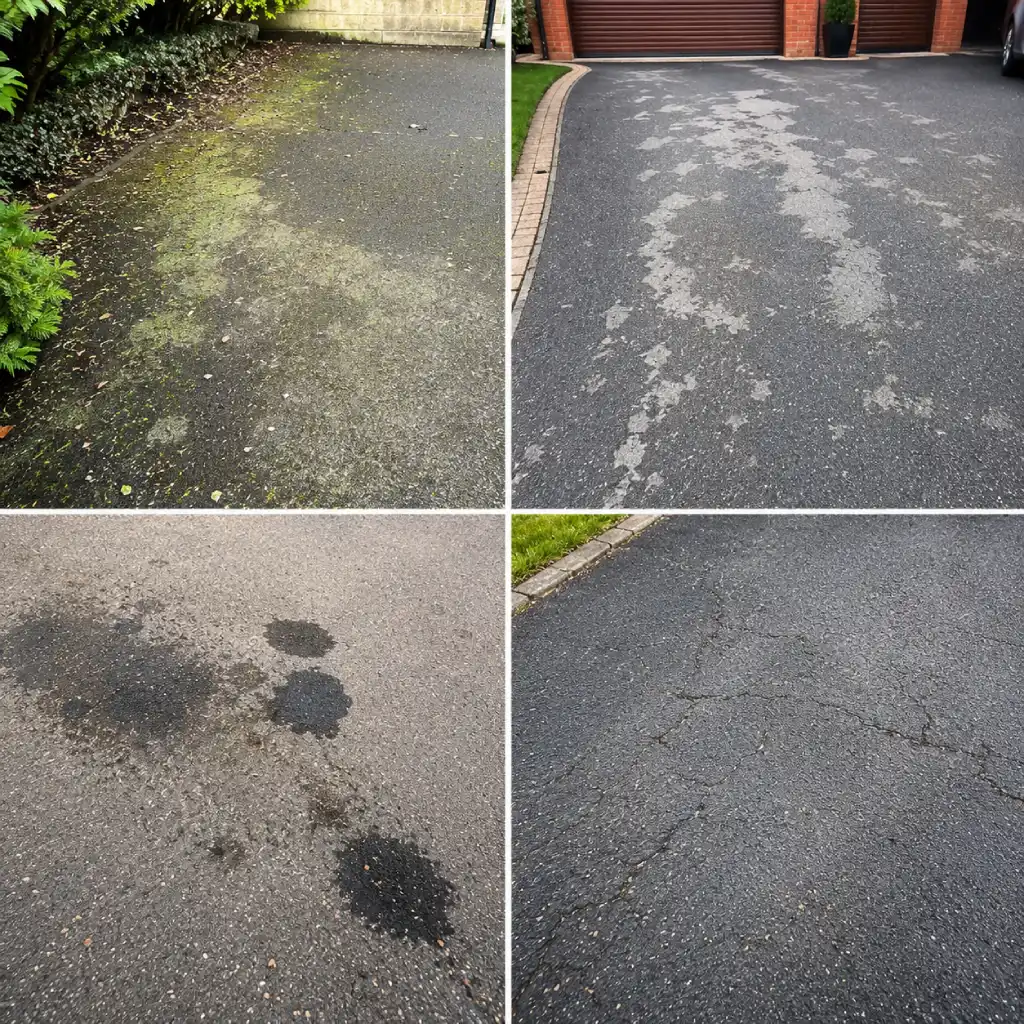
Moss wants shade, damp and something to root into, and a faded drive in a West Yorkshire winter offers all three. It starts along edges, in the shadow of walls and fences, and in any joint or crack where grit has collected. The green film you see in the open is usually algae, and it is often more of a slip risk than the moss itself.
The temptation is to scrape it off or blast it with a pressure washer on the first dry weekend. Both take tarmac with them. Moss holds on by working into the surface, so pulling it off pulls out loose stone too. A biocide, a few days for it to work and a stiff brush do the job without that damage, and the reasons are set out in our guide to cleaning tarmac without wrecking it.
Frost: what it does to a crack
Water expands as it freezes. In a crack or an open, porous surface that expansion pushes the material apart a fraction, the ice melts, more water runs into the wider gap, and the next frost pushes again. One cold night does very little. A winter of nights that drop below zero and days that climb back above it is what opens hairline cracks into proper ones and lifts loose stone out of a tired surface.
So the condition of the surface in October decides most of what the frost can do to it. A surface that is closed and sound sheds water. One that is grey, open and already cracked takes it in. If you can see fine cracks now, that is the thing to have looked at before the next cold spell rather than after it. How to tell a surface crack from something structural is covered in potholes and crumbling edges.
Salt, grit and shovels
Ordinary rock salt is generally considered fine on tarmac in normal amounts, and a drive that is safe to walk on is worth more than a perfect finish. Two things do more harm than the salt itself:
- Metal shovel edges. Scraping a steel blade along tarmac gouges the surface and catches on edges. A plastic shovel, used to push rather than scrape, clears snow without cutting in.
- Grit left behind. After the thaw, brush the grit off. Left on the drive, it is ground into the surface by tyres and blocks drains in the spring.
Keep antifreeze, screenwash and fuel off the surface as well. Winter is when cars get topped up on the drive, and anything petroleum-based softens bitumen in the same way an oil drip does.
Can tarmac be sealed or recoloured in winter?
Usually not, and a contractor keen to coat a drive in December is a warning sign. Bitumen-based treatments need a clean, dry surface, a dry spell while they cure, and a temperature above the minimum on the product sheet. Short, damp winter days in Yorkshire rarely give all three together, so recolouring and sealing are spring and summer work. Clearing, cleaning and getting cracks assessed can happen any time, and booking the coating for when the weather turns is the sensible order. Our piece on whether to seal a tarmac drive covers when the seal is worth having at all.
A short winter checklist
- October and November: clear leaves weekly and keep every drain and gully open.
- Before the first hard frost: walk the drive and note any cracks, loose stone or soft spots.
- Through the winter: treat moss with a biocide rather than a scraper, push snow with a plastic shovel, keep fuel and antifreeze off.
- After the thaw: sweep up grit and walk the drive again. Anything that has opened up since the autumn is telling you where water is getting in.
- Spring: clean, repair what needs repairing, then recolour and seal once the weather is reliably dry.
If the drive is green and grey already, winter is a good time to find out what it actually needs, so the work can be booked for the first dry weeks rather than left until the summer.
This is tarmac work we do from our Wakefield base. Read how our Tarmac Pressure Washing & Cleaning service works, or get a free quote and we will look at your own drive for you.
Common questions
- Can you seal a tarmac driveway in winter?
- Usually not. Bitumen-based sealers and recolours need a clean, dry surface, a dry spell to cure and a temperature above the product minimum, which short, damp winter days rarely give. Sealing is spring and summer work; cleaning and assessing cracks can be done any time.
- Is rock salt bad for tarmac?
- Ordinary rock salt is generally considered fine on tarmac in normal amounts. More damage comes from scraping with a metal shovel and from leaving grit on the surface to be ground in by tyres after the thaw.
- Should I remove moss from a tarmac drive in winter?
- Yes, but not by scraping or pressure washing, which pulls loose stone out with it. Treat it with a biocide, give it a few days and brush it off.