What does tarmac restoration cost?
6 min read Tarmac Revive
The number depends almost entirely on one thing: whether the base is sound. Everything else is detail, and getting that answer wrong is how people pay twice.
Tarmac quotes vary more than most, and for a good reason: two drives that look identical from the pavement can need completely different work depending on what is happening underneath. Here is what actually drives the number.
The question that decides everything
Is the base sound?
Walk the drive. If an area feels soft or springy underfoot, or a wheel visibly deflects it, water has reached the sub-base and softened it. No surface treatment addresses that — it needs excavating and rebuilding, and that is construction work rather than maintenance.
If the surface is firm throughout, you are in restoration territory, and that is a different bracket entirely. Anyone quoting without walking the drive is guessing.
What else moves the price
Cleaning versus restoring
A clean removes moss, algae and grime. It will not put the black back — that is oxidised binder, and it needs a restorative bitumen-based sealer. Two different jobs, often quoted together, and worth separating in your head.
How much edge repair is needed
Crumbling edges are the most common tarmac failure and the most commonly under-quoted item. Repairing the edge without installing proper restraint just resets the clock, so a good quote includes haunching or edging, and a cheap one does not.
Potholes and how deep they go
A shallow pothole over a sound base is a cut-out and patch. The same pothole over a soft base needs that section rebuilding. Ask which yours is.
Area and access
Larger areas cost less per square metre. Awkward access and anything that stops a vehicle getting close adds time.
Black or coloured
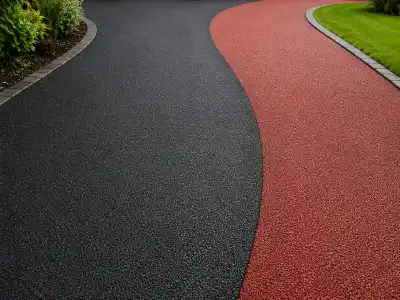
A standard restorative seal returns a deep black. MMA and resin coating systems, used where a colour is wanted or on commercial surfaces needing more chemical resistance, cost more and last longer.
Line marking
Relevant on car parks and commercial areas, and usually priced separately.
How to avoid paying twice
The expensive mistake is sealing a surface with a failing base. The seal looks superb for a season, then the base moves and it cracks through, and you have paid for a treatment and still need the repair.
So the questions worth asking are:
- Have you checked for soft spots, and did you find any?
- Is there interlinked or crocodile cracking anywhere? (That is fatigue failure and structural.)
- Is edge restraint included, or just the edge repair?
- What is the surface preparation before sealing?
- How long before I can drive on it?
Where the money is well spent
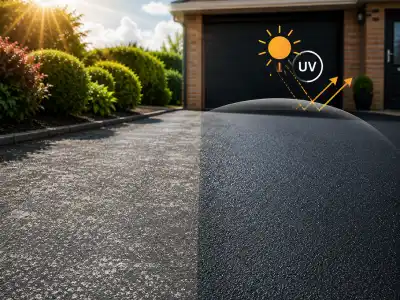
Sealing a grey but sound drive is the cheapest point in its whole life to intervene. The binder is oxidising but the structure is fine, and a restorative seal replenishes the surface and keeps water out.
Leave it three or four more winters, let water through the cracks and into the base, and the same drive is a resurfacing job. The gap between those two numbers is the whole argument for acting while it is merely looking tired.
We would rather tell you a drive needs a base repair than sell you a seal that fails inside a year. Assessments are free.
Common questions
- Why does tarmac pricing vary so much?
- Because it depends on the base. A sound surface needs restoration; a softened base needs excavating and rebuilding, which is a completely different scale of work.
- Can you just seal over a pothole?
- No. A pothole needs cutting out and repairing, and if the base beneath is soft that section has to be rebuilt. Sealing over it hides the problem for one season.
- Is restoring cheaper than resurfacing?
- Substantially, provided the base is sound. That is why acting while the drive is only faded rather than cracked matters.