Can you paint tarmac? Paint, recolouring and coatings compared
6 min read Tarmac Revive
People search for tarmac painting, but painting is usually the wrong word for what a faded drive needs. Here is the difference between paint, a bitumen recolour and a coating system, and what to ask before you agree to any of them.
A fair number of people looking for help with a faded drive search for a tarmac painter. It is a reasonable thing to type: the drive has gone grey, you want it black, and paint is what you use to change the colour of things. The trouble is that paint is rarely the right answer on tarmac, and the word is used loosely enough that two quotes for "painting" can describe completely different jobs.
Why paint struggles on tarmac
Paint works by forming a film that sits on top of a surface. That suits a smooth, stable material. Tarmac is neither. It is a rough, open mix of stone and bitumen that flexes with temperature, and it carries a vehicle that turns its wheels on the spot a few inches from your front door.
- It sits on the surface. A film has nothing to key into except the tops of the stones, so it is the first thing worn away where tyres turn and where water runs.
- Bitumen does not stay put. Bitumen can bleed through light-coloured coatings, and it softens in heat. A film laid over it has to move with it.
- It does nothing about the cause. A grey drive is grey because the binder has gone, and a thin film of colour does not put binder back or close the surface up.
- It hides rather than fixes. Paint over moss, oil or loose stone looks fine for a few weeks and then lifts, taking the loose material with it.
The three things people mean by "painting"
In practice a quote for tarmac painting is one of three different jobs. They are worth keeping apart, because they cost different amounts and behave very differently.
1. Paint or a surface film
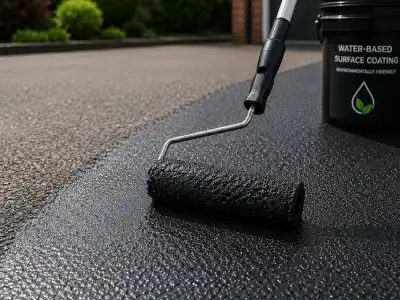
A pigmented coating applied in thin coats to the surface. It is quick, and it can look good immediately. It is also the option most likely to wear in tracks, flake at turning points and need redoing. Where it does belong is small, low-traffic details such as line markings or a bay outline, not a whole driveway that cars turn on every day.
2. A bitumen-based recolour
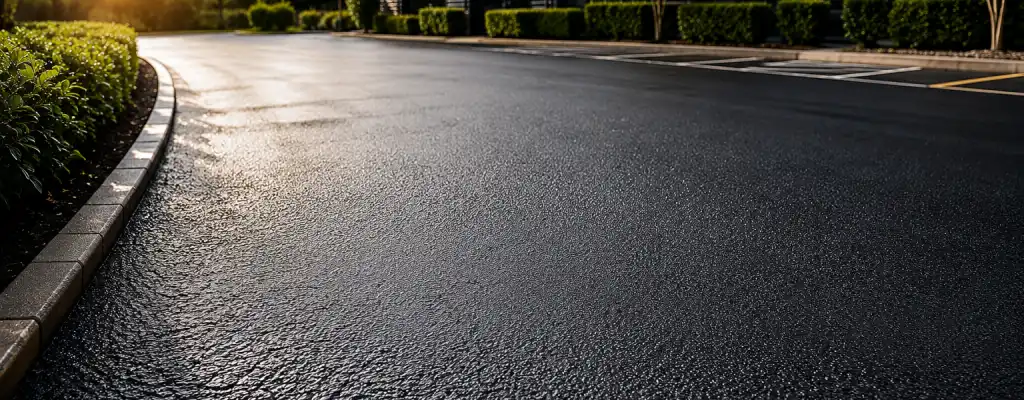
This is what most faded domestic drives actually need. A bitumen-based treatment soaks into the open surface and re-coats the aggregate, replacing the binder that sunlight and rain removed. Because it is chemically the same family as the tarmac, it moves with it and wears down gradually rather than peeling. It closes the surface as well as darkening it, which is why it slows the freeze-and-crack cycle. We cover what it does and does not do in what tarmac recolouring actually does.
3. A coating system
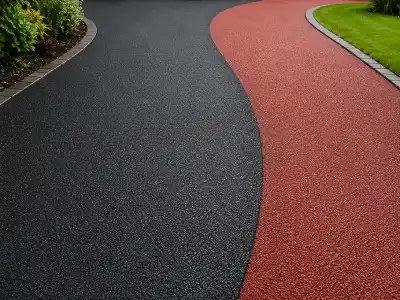
A cured resin system, such as an MMA coating, is a different class of product altogether. It is applied as a proper wearing layer rather than a stain or a paint, and it is the route when a colour other than black is wanted or the surface takes constant heavy use, as on a car park or yard. It is a bigger job and is priced separately from a recolour.
What to ask before you agree to anything
Whatever the job is called on the quote, a handful of questions separate a proper job from one that looks good for a season.
- What exactly is being applied? Paint, a bitumen treatment or a resin system. A contractor who cannot tell you the product type has not chosen one on purpose.
- What happens to potholes, edges and cracks first? Any coating over damage is a coloured version of the damage. Repairs come before colour.
- How is the surface cleaned and dried? Moss, algae and oil have to come off properly, and the surface has to be genuinely dry before anything goes on.
- How will it wear? A good answer describes gradual fading, not "it will last for years" with nothing behind it.
- What does it do to a repair later? A bitumen recolour can be topped up. A thick film has to be removed before anything else sticks to it.
So, can you paint tarmac?
You can, and for small details it is fine. For a driveway that has faded to grey, painting is usually the wrong tool: the job is replacing binder and closing the surface, which is what a bitumen recolour is for, with a coating system when the surface or the colour demands something harder-wearing. If the drive needs a clean first, that has to be done without stripping the binder you are trying to protect.
The honest starting point is to look at the surface and say what it is. Plenty of drives that look beyond help need a clean and a recolour, and a few need a repair before anything else. A free look costs nothing and is better than agreeing to a paint job and finding out in the spring.
Common questions
- Can you paint over tarmac?
- You can, but a paint film sits on the surface and wears off first where tyres turn and water runs. For a faded drive a bitumen-based recolour is usually the better route, because it soaks in and replaces the lost binder.
- What is the difference between tarmac paint and recolouring?
- Paint forms a film on top of the surface. Recolouring applies a bitumen-based treatment that soaks into the open surface and re-coats the stone, so it wears down gradually rather than peeling.
- Do potholes and cracks need repairing before tarmac is coloured?
- Yes. A coating over a pothole or a moving crack is a coloured pothole or crack. Repairs come first, then a proper clean, then the coating.