What tarmac recolouring actually does
6 min read Tarmac Revive
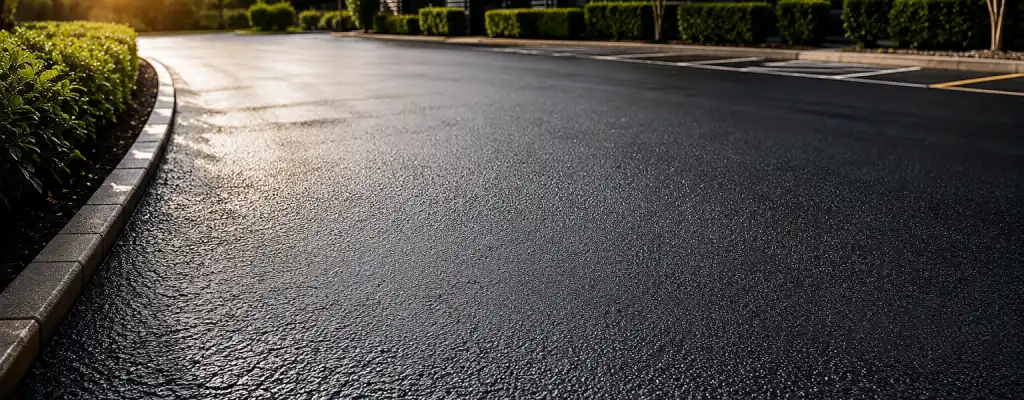
The black you remember is bitumen, and bitumen breaks down in sunlight. Recolouring puts it back at the surface — but only where the surface is still sound.
A tarmac drive that has gone grey has not got dirty. Cleaning it will help, but it will not bring the black back, and understanding why explains what recolouring is actually for.
Where the black goes
Tarmac is grey stone held together by bitumen — a black, tar-like binder that coats every piece of aggregate. When the drive is new you are looking at bitumen, which is why it is such a deep black.
Ultraviolet light breaks bitumen down. Rain carries the degraded surface away, a little at a time, and each cycle exposes slightly more of the grey stone underneath. Ten years of Yorkshire weather and you are looking mostly at aggregate. The drive has not been stained grey; it has been undressed.
What recolouring puts back
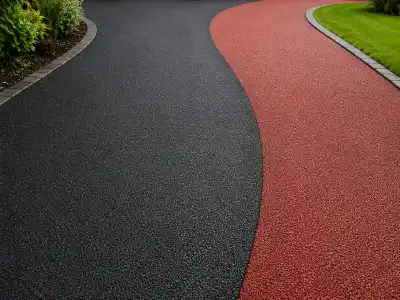
Recolouring applies a bitumen-based treatment that soaks into the open surface and re-coats the exposed aggregate. It is replacing what UV removed rather than covering it, which is the reason it wears like tarmac instead of peeling like paint.
There is a second benefit people do not expect. A surface that has lost its binder is porous, and porous tarmac takes on water, which freezes, expands and starts breaking the surface apart. Re-coating closes that surface up, so the job is as much about slowing further damage as it is about looks.
What it will not do
- Potholes. These are failures of the layers below. A coating over a pothole is a black pothole.
- Crumbling edges. Edges break up where there is nothing supporting them sideways. That needs rebuilding first.
- Structural cracking. Fine surface crazing is fair game. Cracks you can get a finger into are movement underneath.
- Oil-softened patches. Where oil has dissolved the binder, the tarmac itself has to come out.
Anyone willing to coat over these without mentioning them is selling you a drive that looks right for one winter.
The order the work has to happen in
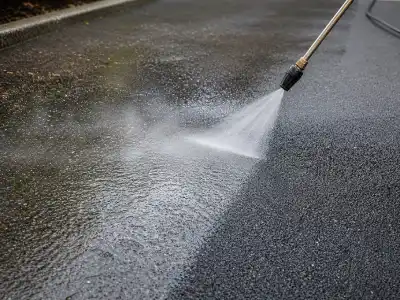
Repairs first, then a professional clean, then the coating. That order is not negotiable. A coating applied over moss, oil or loose material is bonding to the contamination rather than the tarmac, and it will lift in sheets.
Drying time matters too. Tarmac holds water in its open surface for longer than it looks, and coating a damp drive gives you poor adhesion and a patchy finish. This is why the work waits for the weather rather than the diary.
How long it lasts
Longer on a footpath than under a car that turns on the same spot every day. Wheel tracks and turning circles wear first, and a drive that is topped up before it fails looks better for far less money than one left until the aggregate is bare again.
For commercial areas taking constant traffic, a bitumen coating is often the wrong product and MMA coating systems are the durable answer instead. On a domestic drive that is rarely necessary.
Is your drive a candidate
The test is simple. If the surface is sound — no holes, no loose aggregate coming away in your hand, no cracks wider than a hairline — then it has simply lost its binder and restoration will transform it. If it is breaking up, colour is the last thing it needs.
Common questions
- Why has my tarmac gone grey?
- The bitumen binder that coats the stone oxidises under ultraviolet light and washes off in rain. What you are seeing is the grey aggregate underneath, exposed.
- Is recolouring just black paint?
- No. A bitumen-based coating replaces the binder chemically similar to what has been lost. Paint would sit on the surface and lift under tyres.
- Will recolouring fix potholes?
- No, and it should not be used to hide them. Potholes and crumbling edges are structural and need repairing before any coating goes on, or the coating fails with the surface beneath it.