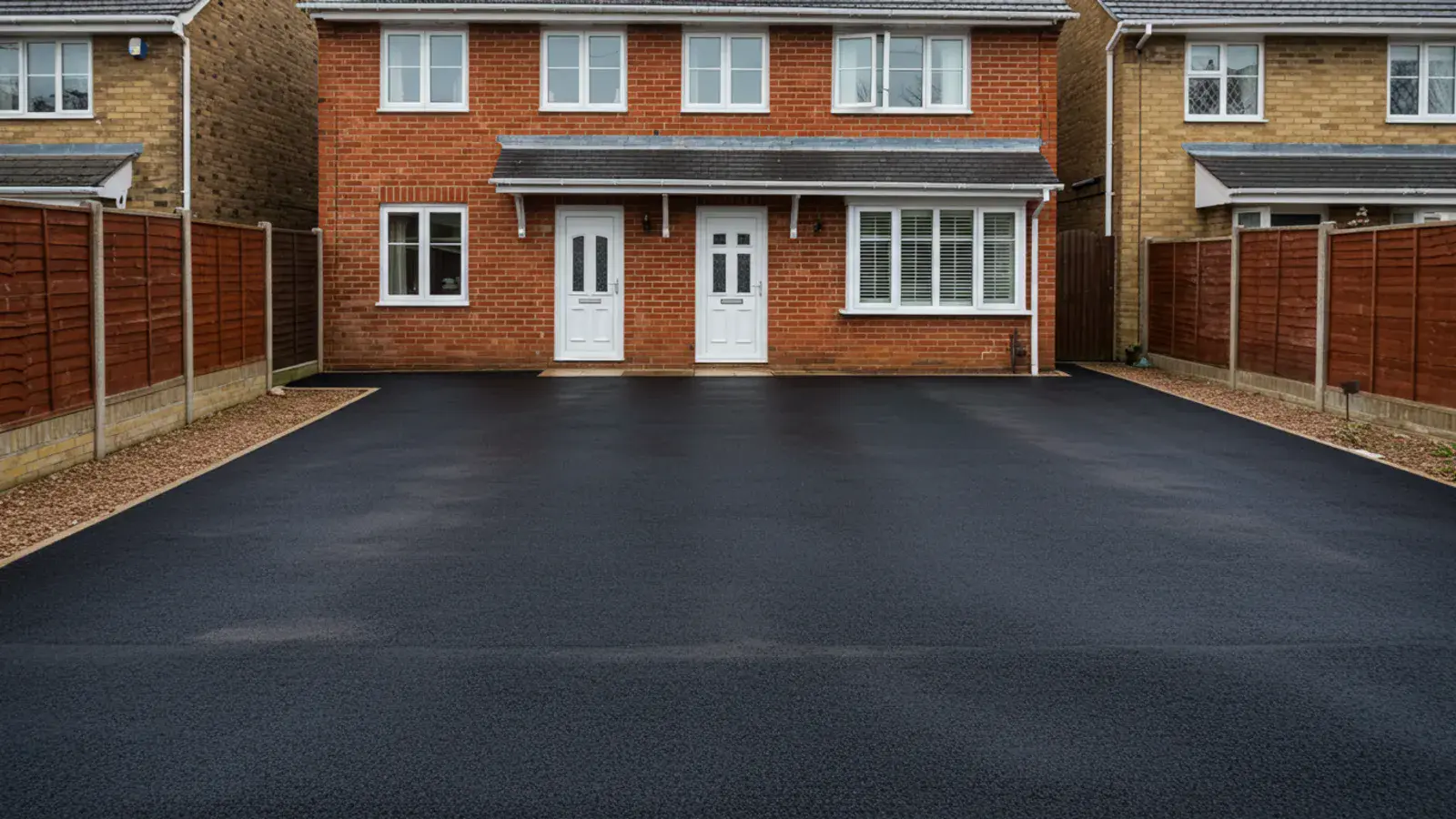
Tarmac restoration in Halifax
Cleaning, recolouring and sealing for tarmac drives across Halifax, Skircoat Green, King Cross, Pellon, Boothtown and Southowram.
Get a free Halifax quoteHalifax is a gritstone town on the eastern slope of the Pennines, built across the steep sides of the Calder valley and its side valleys. The rain that comes in from the west falls on the high ground behind it, and the town takes a lot of it. Between the wet, the gradients and the amount of stone in every wall and gatepost, a Halifax drive has a very particular set of problems.
We clean, recolour and seal tarmac driveways across Halifax and the nearby HX postcodes, and our assessments take the weather and the setting into account as well as the surface itself.
Wet ground and what it grows
A wet climate decides most of what happens to tarmac. Where the rain is frequent and the sun scarce, a surface seldom has the chance to dry out, and anything that thrives on damp thrives on it. Moss is the obvious sign. Less obvious is the algae film beneath it that makes the surface slippery before it looks bad, and the slow loss of binder from a surface that is never fully dry.
A clean removes the growth, but in a persistently damp spot it will come back unless something changes: more light, more air, or a surface sealed against the water. Cleaning tarmac without damaging it explains how the clean should be done, and our note on sealing a tarmac driveway covers when sealing is worthwhile on a wet site like this.
Stone to the edge of the tarmac
Halifax is a place where almost everything is built of the local stone. Drives are walled with it, edged with it and sometimes set with it, in the form of setts or flags. Gateposts and boundary walls throw cold shade and shed water, and the junction between tarmac and stone is where moisture sits and frost goes to work.
A drive laid against a stone wall tends to crack in a line parallel to it, and to lose its edge in crescents. The repair is local and straightforward if it is caught early, and expensive if the edge is allowed to go. We check the joints with stone, kerbs and setts and make those repairs before anything is coated. Potholes and crumbling edges sets out what each type of damage is telling you.
A town of hills and ginnels
The Calder valley and the valleys of its tributaries cut deep into the Pennines here, and Halifax is built up the sides of them. The old centre, with the Piece Hall and the mills, sits low, and the streets climb away from it to Skircoat Green and King Cross in different directions, and to Southowram on the ridge to the east. Pellon, Boothtown and Siddal sit on slopes of their own.
On slopes like those a drive is often steep, narrow and cut into the hillside, and the access may be tight enough to affect how work is done. Tell us about the approach when you ask for an assessment, because it helps us plan the visit. Steep surfaces wear unevenly, with tracks, a collecting point at the bottom and an edge against the bank, which is what recolouring is for once the structure is sound.
Mills, units and working yards
The town's mills have found new uses, and a lot of them have yards, loading bays and car parks that are tarmac. Those surfaces take heavier, more constant use than a domestic drive, and much more oil. Vehicles park on them in the same spots for years, and the same wet climate that grows moss on a drive also keeps the oil on a yard from drying out.
Commercial surfaces are done on the same principles as drives: oil out first, repair, clean, then colour and seal. If you manage a yard or a car park, tarmac restoration covers the full job. Whether it is worth it for your site is something we will say honestly after an assessment.
Working in a wet climate
Nothing goes on until the surface is dry, and in Calderdale that means choosing the weather. A coating applied to a damp surface does not stick. We would rather wait for a good spell than rush, and we will tell you so up front, because it affects when work can be done. We cover HX across the town, including Skircoat Green, King Cross, Pellon, Boothtown, Southowram and Siddal, and the map on the contact page shows the area we serve. Huddersfield is the next town to the south-east, Bradford lies to the north-east and Dewsbury to the east.
Common questions
- Does the weather hold work up in Halifax?
- It can. A coating will not stick to a damp surface, so work waits for it to dry, and in a wet climate that can mean picking a spell of dry weather. We will say so up front rather than promise a date the weather might not allow.
- What about the edge where my drive meets a stone wall?
- It is a weak point. Water collects against stone and frost works into the joint, so the tarmac cracks in a line and loses its edge in crescents. We check those joints and repair a failing edge before any coating goes on.
- Which parts of Halifax do you cover?
- The HX postcodes in and around the town, including Skircoat Green, King Cross, Pellon, Boothtown, Southowram and Siddal. The map on our contact page shows the area we serve, so ask if you are on the edge.
What we offer in Halifax
Tarmac Cleaning & Restoration
Specialist cleaning lifts dirt, moss and oxidisation from tired tarmac, restoring a cleaner, safer surface.
Halifax tarmac cleaning & restorationTarmac Recolouring
Restore faded, grey tarmac to a rich, deep black with a durable recolouring treatment.
Halifax tarmac recolouringMMA Tarmac Coatings
Hard-wearing decorative MMA coatings add colour, grip and protection to tarmac surfaces.
Halifax mma tarmac coatingsTarmac Restoration & Sealing
Full restoration and sealing to protect tarmac, enhance colour and extend its lifespan.
Halifax tarmac restoration & sealingNearby areas we cover
Restore your Halifax tarmac drive
Book a free, no-obligation assessment and we will tell you honestly what your surface needs.
Request your free quote