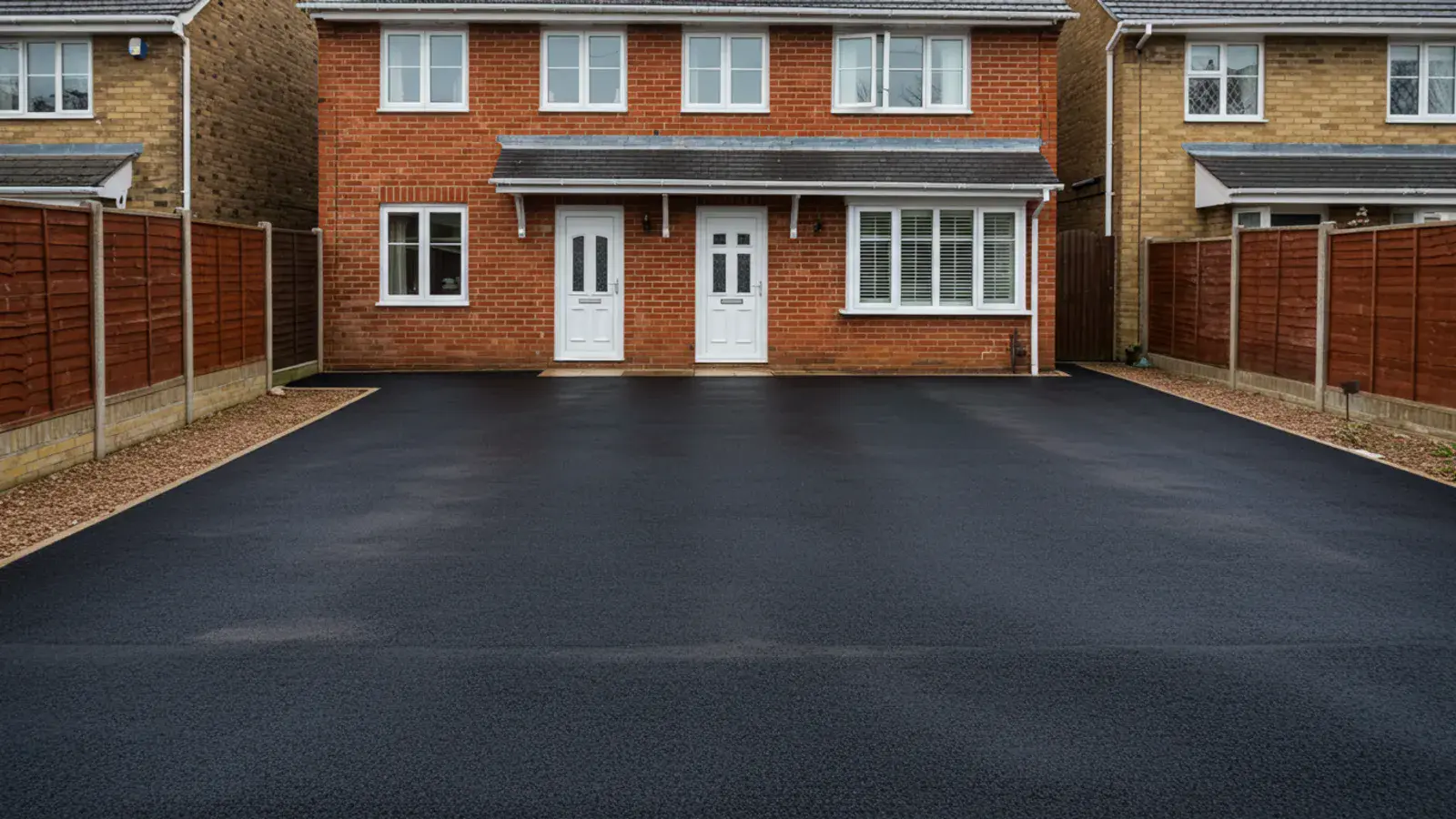
Tarmac restoration across Yorkshire
Cleaning, sealing and restoration for tarmac driveways, car parks and access roads across Yorkshire.
Price up my Yorkshire tarmacYorkshire is the biggest county in England, and you could not call its weather or its ground one thing. A tarmac drive on the Pennine side is dealing with a different set of problems from one on the plain of York or the chalk of the Wolds. The surface is the same stone and bitumen, but the way it dies is not, and knowing which kind of place a drive sits in is half of knowing what it needs.
This page is the overview. We are a West Yorkshire team, based in Wakefield, and the town pages go into detail where we have written them. Here is how the county breaks down, and what that means for a tarmac surface.
The Pennine side: wet, high and cold
The western half of the county is the Pennine slope, and it takes the rain. Weather coming in off the Atlantic climbs the hills and drops its water there, so the valleys of Calderdale and Kirklees and the high ground above them are noticeably wetter than the east. Drives stay damp, moss and algae spread, and frosts come early on the tops. A faded, open surface soaks that water up and breaks when it freezes. Huddersfield is the clearest example, with its drives running up valley sides to the moor edge.
The coalfield belt and its ground
East of the high Pennines, from Wakefield and Barnsley down to Doncaster, lies the old Yorkshire coalfield. The housing is largely colliery villages, terraces and estates built in a hurry, and it is common for entire streets to have drives laid at the same time and fading at the same rate. Old mining areas also come with ground movement, and a coating will not hold across a crack that is still moving, so we look at cracks before a quote. Wakefield and Barnsley are both written up with that in mind.
Cities, trees and steep ground
Yorkshire's cities have their own character. Leeds brings big suburban tree cover, Victorian villas and back-to-back terraces, and with them leaf fall, shade and slow-drying frontages. Sheffield is built on hills, which means water runs across and down drives instead of sitting on them, and wear collects in channels and at the low end. The surface is the same in both, but the cause of the fade is different, and so is where it shows first.
The Vale of York and the plain
Go east and the land flattens out. The Vale of York and the Humberside lowlands are drier than the hills and lie in their rain shadow. The trouble on flat ground is a different one: water does not run off a flat drive, it stands. Puddles that sit for days work into the surface from above. Farms, long private tracks and village drives are common here, and a tarmac farm yard is a heavy-duty surface with diesel and mud to deal with.
The Dales, the Wolds and the coast
North and east the landscape changes again. The Dales have limestone and gritstone farmsteads at the end of long tracks, high ground and hard winters. The Wolds are chalk, open and exposed to the wind. On the coast, sea air and the haar rolling in off the North Sea bring salt and persistent damp. The conditions on these edges of the county are very different from the ones we have written about town by town, and we have not written a page for any of them.
What stays the same everywhere
Whatever the climate, the surface behaves the same way. Tarmac is stone held together by bitumen, and sun and rain wear the bitumen off the top, which is why it turns grey; why tarmac fades to grey explains it in full. A grey surface that is still sound can be cleaned, then recoloured and sealed. One that has broken up needs repair first, and no coating should be used to hide it.
It also tells you what not to do. Aggressive washing opens the surface up, which is why how to clean tarmac without wrecking it is worth reading before you hire a pressure washer. For a choice between treatments, our four services are cleaning, recolouring, MMA coatings and restoration and sealing.
Where we work in Yorkshire
We are based in Wakefield and cover West Yorkshire and the surrounding areas. The map on our contact page shows our core area. Harrogate and Sheffield sit outside it and are covered; if you are just outside it somewhere else and not sure whether we reach you, ask. Our town pages are the best guide to the places we know closely: Wakefield, Leeds, Huddersfield, Barnsley and Sheffield. The service areas page lists them all.
Common questions
- Does tarmac last longer in some parts of Yorkshire than others?
- Yes. Wetter, colder ground in the Pennines puts more water and more frost through a surface, so an open, faded drive breaks up sooner there than on drier, flatter land. A surface that has been kept sealed is better placed anywhere.
- Do you cover all of Yorkshire?
- We are based in Wakefield and cover West Yorkshire and the surrounding areas. The circle on our contact page is our core patch, and we cover Harrogate and Sheffield outside it. Elsewhere near the edge of it, ask before assuming either way.
- Is a flat drive easier to look after than a sloping one?
- Not necessarily. A slope sends water down particular lines and wears them out, while a flat drive holds standing water that works into the surface. Both want an open surface closed up before the winter.
- Can you restore farm tracks and yards?
- Where the tarmac underneath is sound, yes. Farm surfaces carry mud, diesel and heavy vehicles, which are cleaned off before anything is applied, and we will say if the base needs repair rather than a coating.
What we offer across Yorkshire
Tarmac Cleaning & Restoration
A wash at a pressure bitumen can take, with moss and algae treated at the root and the edges weeded.
Yorkshire tarmac cleaning & restorationTarmac Recolouring
Black or red worked back into tarmac the sun has bleached grey, for drives that are still firm.
Yorkshire tarmac recolouringMMA Tarmac Coatings
A quick-curing resin layer for car parks, yards and busy shared drives, in six colours.
Yorkshire mma tarmac coatingsTarmac Restoration & Sealing
Wash, oil treatment, recolour and seal, done in that order, closing the surface against rain and frost.
Yorkshire tarmac restoration & sealingRestore your Yorkshire tarmac surface
Not sure whether your part of Yorkshire is inside our circle? Harrogate and Sheffield are; for anywhere else, send your postcode and we will tell you before anything else.
Request your free quote